

A low voltage surge protector is not selected from the phrase “low voltage” alone. The buyer first needs to identify the protected path: AC power, a signal or control interface, or another documented circuit. The same cabinet may contain several paths that need separate reviews.
For a commercial project, collect the circuit voltage, topology, interface type, installation location, environment, and current device documentation. Then ask whether the proposed SPD is actually documented for that path.
Low voltage surge protector paths are different questions
In practical procurement language, the phrase may describe a low-voltage SPD, a low-voltage power circuit, or a signal interface. Those are not interchangeable descriptions. Name the circuit and interface before asking for a device shortlist.
For example, an AC feeder review asks about system voltage, phase arrangement, grounding, and upstream protection. A control or data path review asks about interface type, operating signal, cable route, shield or reference, and equipment requirements. Keep these evidence sets separate.
Low-voltage power and signal protection are different questions
| Review area | Low-voltage AC power | Signal or control circuit |
|---|---|---|
| Protected path | Feeders, distribution boards, equipment supplies, or other AC loads. | Control, data, instrumentation, or communication interface. |
| Inputs | System voltage, phase arrangement, grounding, enclosure, and upstream protection. | Interface type, operating signal, cable route, shield or reference, and equipment requirement. |
| Device evidence | Current AC SPD datasheet and installation documentation. | Current signal-interface protection documentation from the device manufacturer. |
| Common mistake | Assuming a broad “low voltage” label proves topology compatibility. | Assuming an AC power SPD protects a signal pair or network port. |
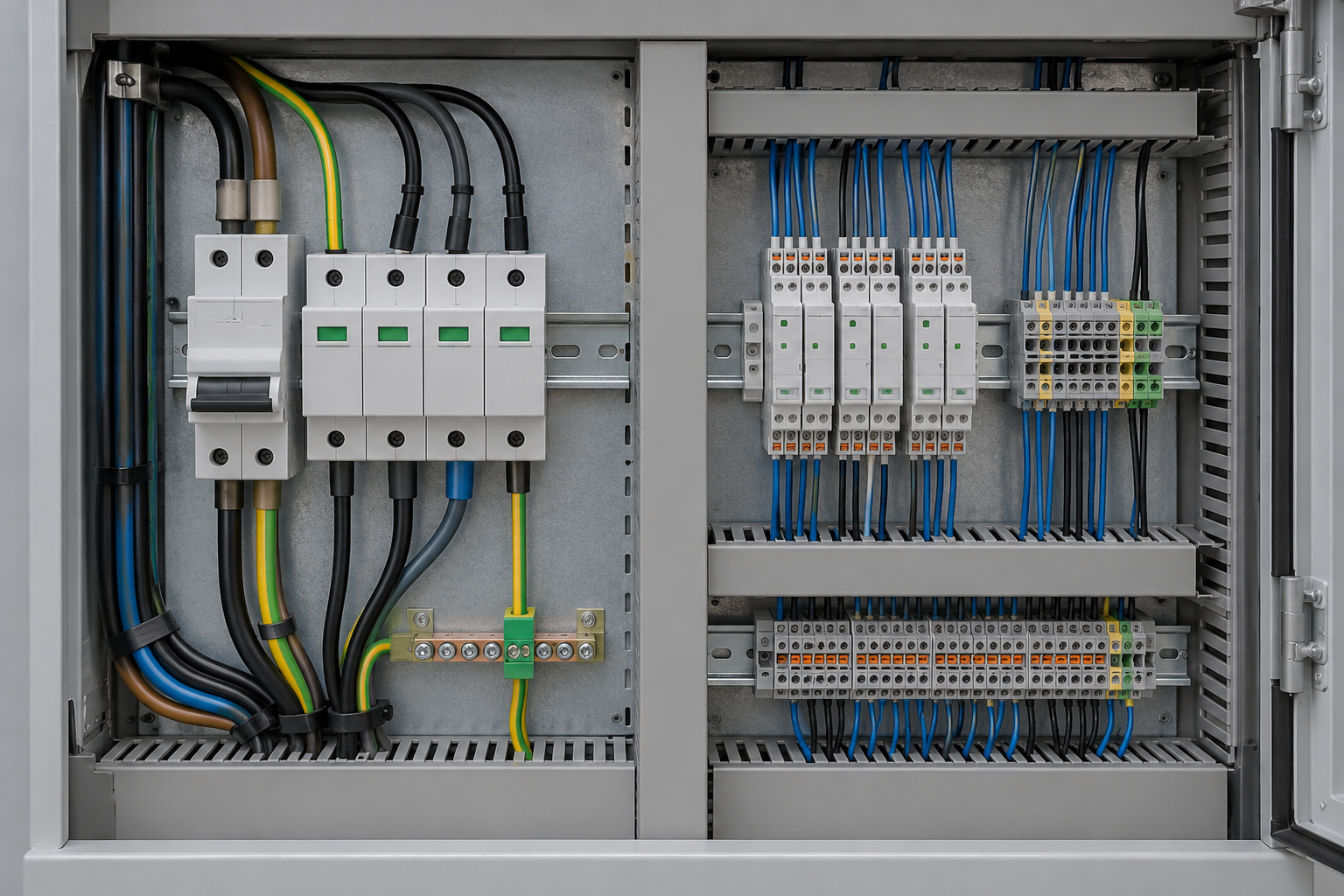
Selection factors for a low-voltage SPD
- Identify the system and circuit role. Record whether the path is AC power, control, data, or another interface.
- Record voltage, phase, grounding arrangement, operating environment, enclosure, and cable route.
- Check the manufacturer’s continuous operating value, modes, discharge ratings, and protective-device coordination fields for the exact model.
- Confirm that the device documentation covers the interface and installation context. Do not infer this from a category name.
- Ask a qualified designer to review the one-line diagram, bonding, conductor path, and applicable project requirements.
For AC family discovery, the Wanze AC surge protection device category is a starting point. It does not establish signal-line compatibility or project approval.
A buyer should also record what the device is expected to protect, who owns the circuit, whether the path leaves the enclosure, and which current drawing or datasheet supports the request. These details prevent a generic low-voltage label from becoming an unsupported compatibility promise.
For a power path, the request should identify the distribution point and the relationship to upstream and downstream protective devices. For a signal path, the request should identify the interface, cable entry, reference or shield arrangement, and the equipment maker’s requirements. These are different review packets even when they share a cabinet.
Procurement teams can reduce rework by attaching the one-line or panel drawing, the current datasheet, the installation instructions, and the revision date to the request. If the evidence does not identify the protected circuit, pause the comparison instead of selecting a device from a broad low-voltage label.
FAQ
What does “low voltage” mean for surge protection?
It is a broad application description, not a complete device specification. The circuit role, topology, interface, and current documentation still have to be identified.
Can one SPD protect AC power and a control signal?
Do not assume so. AC and signal paths have different interfaces and documentation requirements. Verify each path separately.
What should a buyer request?
Request the current datasheet, installation instructions, system inputs, and the evidence that the device is intended for the proposed path. Keep certification and code questions with the qualified project reviewer.