
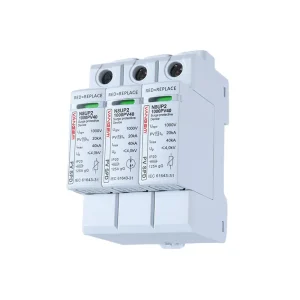
Solar PV Surge Protection Device
Solar PV surge protection devices for photovoltaic DC applications. Compare the published Type 2 and Type 1+2 catalogue models, with separate checks for array voltage, protection modes and inverter-side requirements.
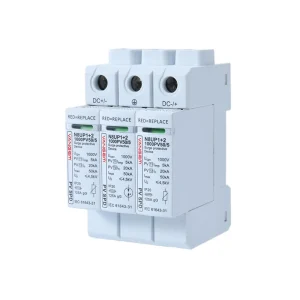
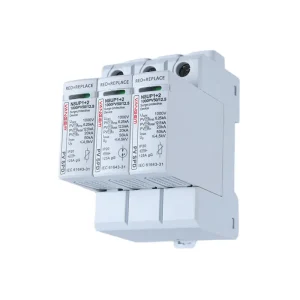
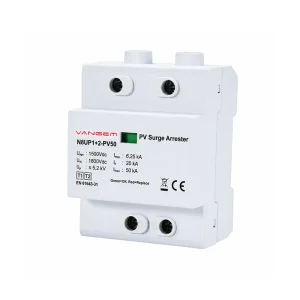
Compare the published solar PV SPD models
A solar PV surge protection device belongs to the photovoltaic DC protection path. Keep it separate from the inverter’s AC supply protection. The four catalogue models below have different declared types and rating combinations; a higher voltage or larger current label does not automatically identify the right model.
| Catalogue model | Declared type | Published continuous PV voltage | Document review focus |
|---|---|---|---|
| N8UP2-1000PV40 | Type 2 | 1000 V DC | In 20 kA / Imax 40 kA at 8/20 μs; protection mode and current connection sheet. |
| N8UP1+2-1000PV50/5 | Type 1+2 | 1000 V DC | Iimp 5 kA at 10/350 μs; exact configuration and supporting data. |
| N8UP1+2-1000PV50/12.5 | Type 1+2 | 1000 V DC | Published Iimp and Itotal are separate entries; do not treat them as interchangeable. |
| N8UP1+2-1500PV50/12.5 | Type 1+2 | 1500 V DC | Maximum array voltage, mode, configuration and required project documents. |
The voltage column reports the linked pages’ continuous PV-voltage field; it is not a complete array-selection rule. Confirm the current sheet, exact configuration and destination-market requirements. A value embedded in a model name is not a substitute for the rating definition.
Specify the DC conditions before selecting a PV surge protector
Provide the array/string arrangement, maximum open-circuit voltage under the design conditions, earthing arrangement and intended SPD location. Also identify the inverter’s DC input requirements, the route between array equipment and inverter, and any external lightning-protection design. The system designer needs those conditions before comparing the declared operating voltage and protection modes.
Phoenix Contact’s photovoltaic application guide treats the DC array path and inverter/AC locations separately. Use that distinction to build the document request. Do not take a general distance example or another project’s diagram as a universal rule for the present installation.
Type 2 or Type 1+2 for a solar application?
State the standard and the project’s required surge/impulse duty. Compare the declared type, In, any Imax or Iimp values, the waveform and whether a value applies per mode or to an assembly. Combined Type 1+2 wording does not eliminate the need for a documented location and connection review.
For background, see the SPD type comparison and complete rating guide. For an inverter AC connection, use the separate AC surge protection devices category. Devices with a similar modular housing are not automatically interchangeable between those circuits.
What to include in a solar SPD enquiry
- Array/string configuration and the maximum design DC voltage.
- Earthing, protection modes and proposed array/inverter location.
- Required standard/type, environmental conditions and existing protection.
- Exact model, quantity, destination market and required documents.
- Current schematic, dimension sheet and configuration-specific report requirements.
Request the relevant file set through Downloads and send the project details to Wanze. Confirm certification scope, commercial terms and the offered configuration during quotation. The public comparison table is an initial screening aid.
PV surge protection questions
Can an AC SPD be used on the PV DC side?
Do not assume interchangeability. Use a device explicitly documented for the actual PV DC conditions and connection arrangement.
Does a 1500 V model automatically improve a 1000 V system?
No. Continuous operating voltage, protection level, type and system match are separate checks. A larger voltage label is not a universal improvement.
Does a solar SPD replace bonding or circuit protection?
No. It addresses transient overvoltage within its documented conditions. Bonding and the circuit’s protective devices remain separate design requirements.