

A DC surge protector for solar PV belongs to the photovoltaic DC path, not automatically to the inverter’s AC output. The useful selection question is where the device sits in the array-to-inverter path, what system data it must match, and which current manufacturer documents support the choice.
Start with the array voltage, string arrangement, inverter input, cable routes, environmental exposure, and the project’s protection layout. Then compare the exact device documentation instead of treating “solar” or “DC” as a complete specification.
DC and AC protection are separate path reviews
| Review area | PV DC path | Inverter-side AC path |
|---|---|---|
| System location | Array, combiner, string, or inverter DC input. | Inverter output, distribution board, service entrance, or downstream load. |
| Key inputs | Maximum PV system voltage, string arrangement, polarity, and Ucpv or applicable continuous operating value. | AC voltage, phase arrangement, grounding, topology, and MCOV or applicable AC value. |
| Exposure | Long outdoor conductors, roof routing, array entry, and weather. | Grid coupling, transfer equipment, building distribution, and load changes. |
| Evidence | Current PV DC datasheet and installation documentation. | Current AC SPD datasheet and project one-line diagram. |
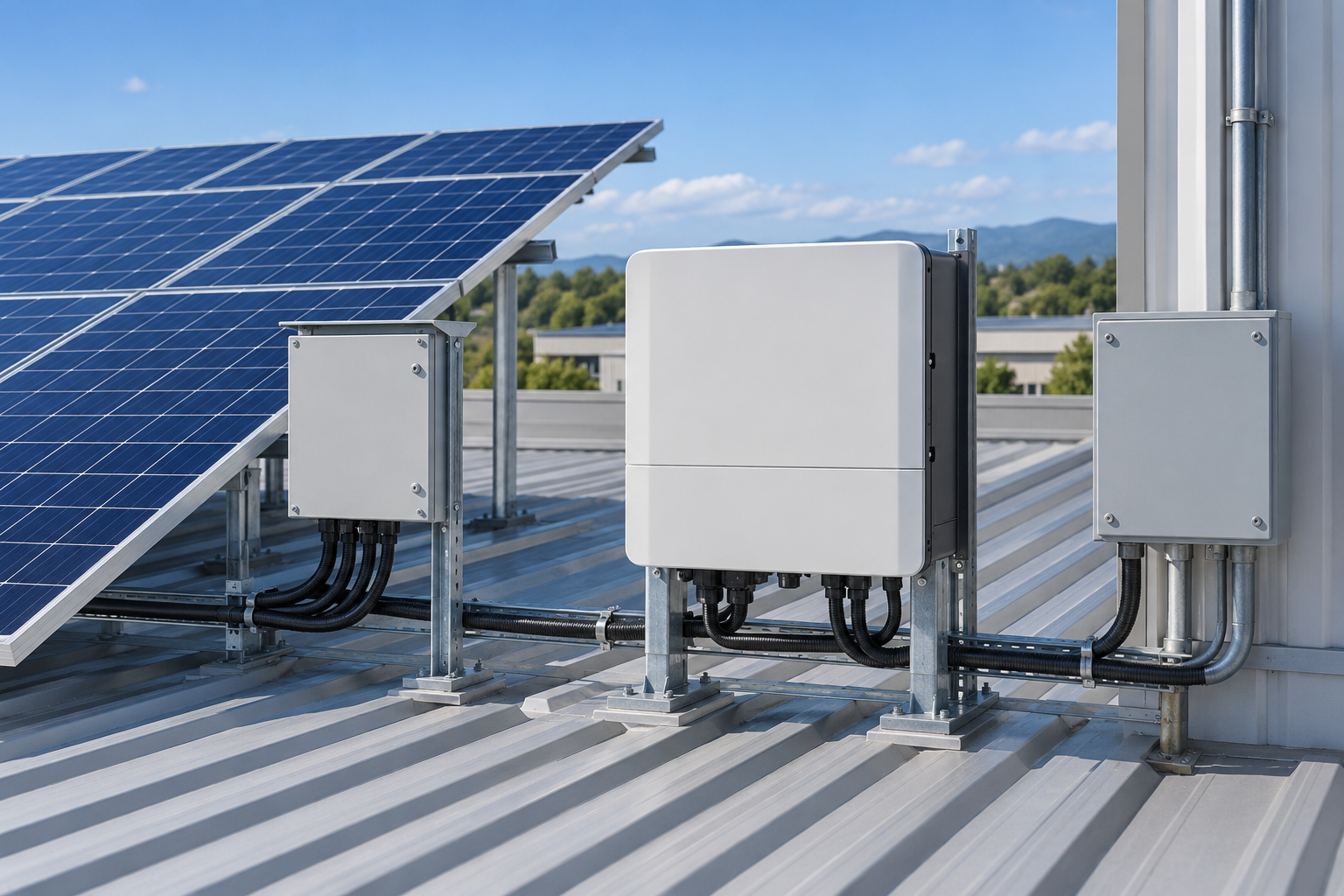
Inputs to verify before choosing a DC surge protector
- Record the maximum PV system voltage, string arrangement, polarity, and inverter DC input information.
- Compare Ucpv or the applicable continuous operating value with the actual system data and the current device datasheet.
- Map array, combiner, inverter, building entry, and other exposed conductor paths.
- Review enclosure, temperature, moisture, contamination, and routing conditions.
- Request the current installation manual and have a qualified designer review coordination, grounding, bonding, and project requirements.
For product-family discovery, use the Wanze solar PV surge protection device category. The category does not replace the exact model and project review.
A useful design record follows the conductor path from the array to the inverter and notes where cables enter a building or change routing. The record should distinguish string, combiner, inverter-input, and inverter-output questions so an AC device is not accidentally carried into a DC selection. It should also identify the document revision used for each decision.
For commercial PV procurement, request the array and inverter data, the protection layout, enclosure and environmental requirements, and the current installation instructions together. This creates a traceable review packet. It does not replace engineering approval, but it makes the scope of the DC surge protector request clear enough for a qualified reviewer to validate.
When a system is expanded or rewired, repeat the path review rather than assuming the existing SPD remains suitable. Array voltage, string arrangement, cable exposure, and inverter inputs may change. Treat each change as a documentation event and compare the current product information before approving the updated bill of materials.
FAQ
Can an AC SPD protect a PV string?
Do not assume so. The PV string and AC output are different paths with different device documentation. Verify each path separately.
What is Ucpv?
Ucpv is a PV continuous operating voltage field used in product selection. Compare the documented value with the actual PV system data for the proposed device.
Where should DC protection be reviewed?
Review the array, combiner, inverter input, exposed cable routes, and building entry as part of the project protection layout. The exact locations depend on the system and applicable requirements.