

Electrical surge protection for a commercial facility is a system decision, not a single product label. Start by mapping the building’s incoming service, distribution boards, outdoor conductors, sensitive loads, and likely switching or lightning exposure. Then match each protected path to current device documentation and the project one-line diagram.
A commercial selection should answer four questions: what can create the transient, which path carries it, what role the SPD has in that path, and which records prove the selection is suitable. This sequence keeps a broad search for electrical surge protection connected to an actual procurement brief.
What electrical surge protection should cover
Coverage is usually layered. A service or main distribution review may differ from a downstream panel, a control cabinet, a rooftop conductor, or a data interface. The article does not prescribe a universal layout; it gives the evidence fields a buyer should collect before asking a qualified designer to confirm the arrangement.
| Review layer | Question to answer | Evidence to request |
|---|---|---|
| Exposure | Which service, outdoor conductor, switching event, or lightning environment is relevant? | Site description, one-line diagram, conductor routes, event history. |
| Protected path | Is the path a service, feeder, branch circuit, control interface, or another documented circuit? | System voltage, topology, grounding, panel and load information. |
| SPD role | What protection modes and continuous operating fields are required for that path? | Current datasheet and installation instructions for the exact model. |
| Coordination | How does the device fit with upstream protection and maintenance access? | Project review notes, enclosure details, maintenance record. |
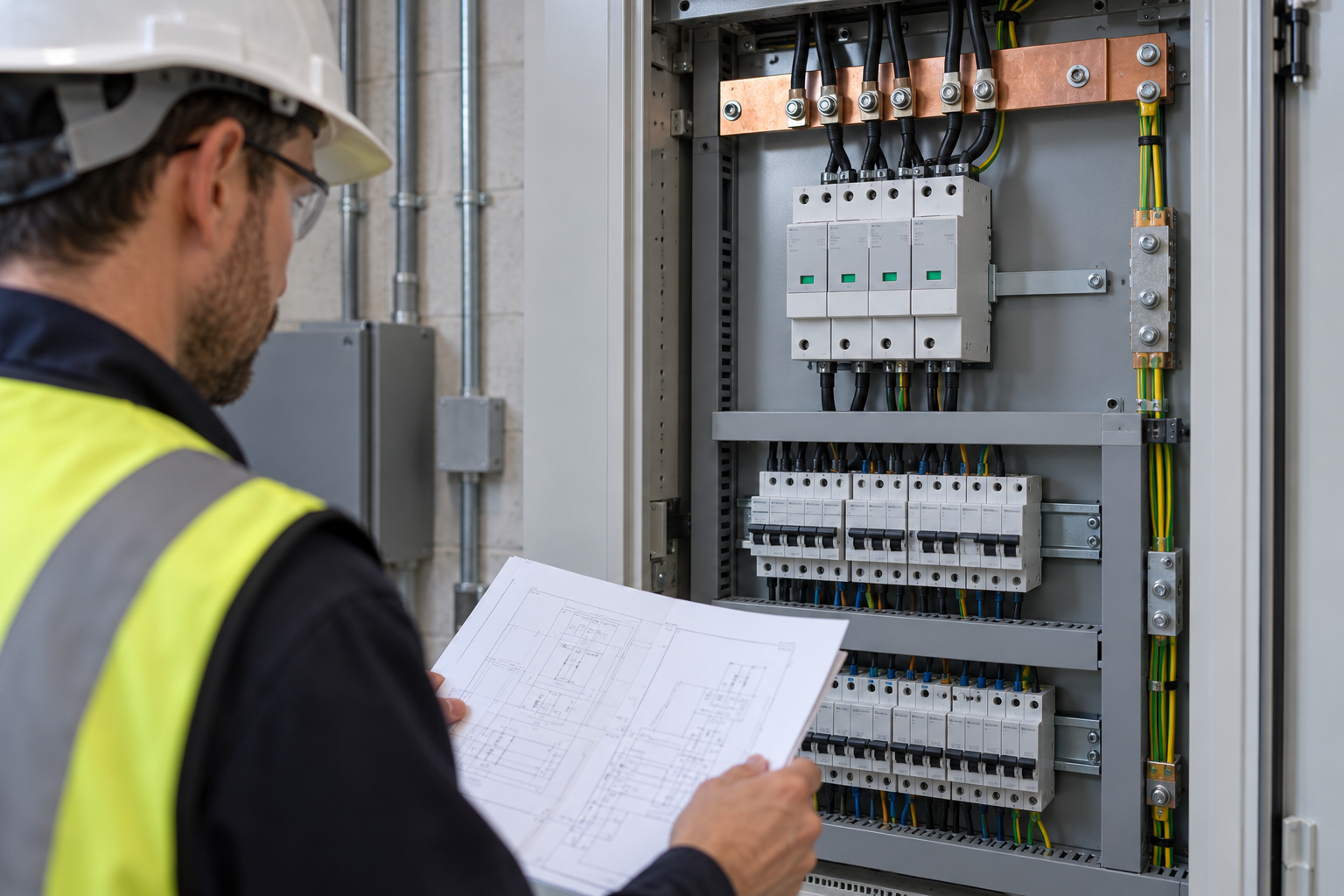
How to build a commercial selection brief
- Identify the facility, service location, distribution level, protected load, and responsible project owner.
- Record system voltage, phase arrangement, topology, grounding, enclosure, environment, and conductor route.
- Separate AC power, PV DC, control, data, and other interfaces instead of using one generic “surge” category.
- Request the exact device datasheet, installation instructions, indication meaning, and coordination information.
- Ask a qualified reviewer to compare the device with the one-line diagram, protection plan, and project requirements.
For product-family discovery, see the Wanze AC surge protection device category. A category page does not establish model fit, certification, or installation approval.
A good request also records the document revision and the assumptions that were not verified. If the facility changes a service entrance, adds rooftop equipment, or expands critical loads, repeat the path review rather than copying an earlier device list.
FAQ
What is electrical surge protection?
It is the planned use of devices, conductors, bonding, and documentation to limit transient overvoltage on defined electrical paths. The path and project context determine what should be reviewed.
How is a commercial SPD selected?
Define the protected path, system data, exposure, enclosure, current product documentation, and coordination context. A qualified designer then confirms the selection.
Can one device protect every building load?
Do not assume so. Service, feeder, branch, control, data, and PV paths can have different requirements and documents.