

Power surge protection planning begins with the loads a facility cannot afford to lose. An industrial line, commercial HVAC controller, building-management panel, network room, and ordinary branch load may experience different exposure and downtime consequences. A planning brief should rank those paths before anyone proposes a device list.
The useful question is not whether a building has “surge protection.” It is whether the service, distribution, and critical-load paths have been identified, documented, and assigned an appropriate review owner.
Which loads should power surge protection prioritize?
| Load group | Planning question | Evidence to collect |
|---|---|---|
| Critical production | Would a transient stop a process, controller, or production sequence? | Process owner, panel location, downtime impact, equipment documents. |
| Building systems | Which HVAC, access, fire, or building-management controls are exposed? | Control paths, panel drawings, outdoor routes, maintenance record. |
| Network and data | Which communication paths leave the protected room or building? | Interface type, cable route, shield/reference, equipment requirements. |
| General distribution | Which feeder or branch paths need a broader review? | One-line diagram, system data, grounding and enclosure information. |
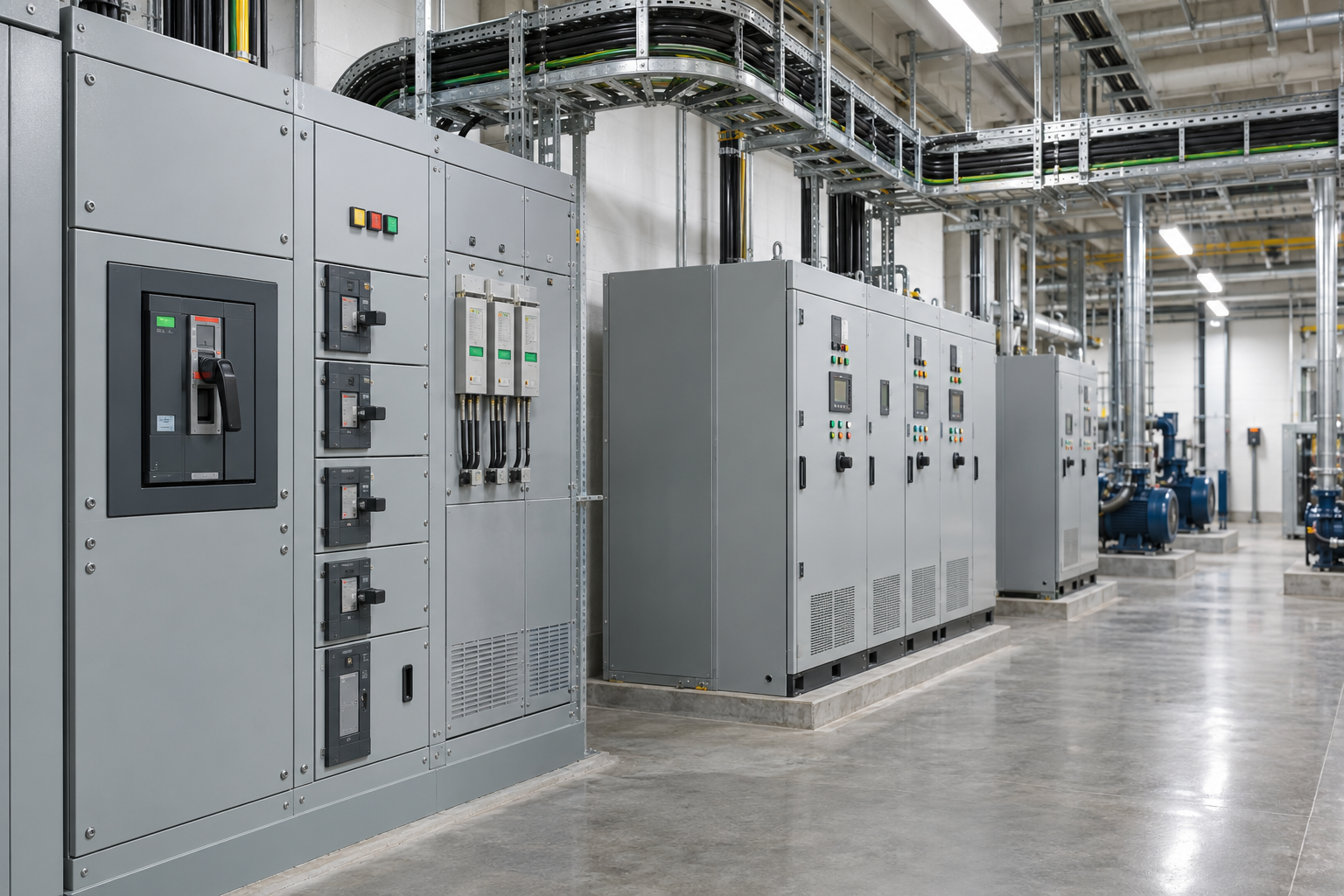
How layered power surge protection is planned
Start at the service and work toward the loads. Record where conductors enter the building, where panels change level, where outdoor or long conductors are present, and where sensitive controls connect. Then separate AC power questions from signal, data, PV DC, and other interfaces.
Layering is not permission to install a device at every panel without coordination. Each proposed location needs a defined role, current device documentation, conductor and bonding context, and a maintenance owner.
- Rank loads by operational criticality and transient exposure.
- Map service, feeder, branch, control, and communication paths.
- Record voltage, topology, grounding, enclosure, environment, and cable routes.
- Request current datasheets and installation instructions for each proposed role.
- Have a qualified designer coordinate the plan with the one-line diagram.
For family discovery, see the Wanze AC surge protection device category. It is not a substitute for plant-specific design or approval.
FAQ
What does power surge protection cover?
It covers a defined review of transient exposure on specified power paths, including service, distribution, and selected critical loads. It does not automatically cover every signal or data interface.
Which loads need layered protection?
Prioritize paths with high downtime impact, long or outdoor conductors, sensitive electronics, switching exposure, or documented project requirements.
Is one large device enough?
Do not assume so. The appropriate layers depend on the path, system, exposure, coordination, and current product documents.