

An electrical fuse box uses fuses as its protective devices; a circuit breaker panel uses circuit breakers. An operated fuse has a fusible element that opens and requires replacement. A breaker opens switching contacts and may be reset. The enclosure, the protective device and the condition of the installation are separate parts of the comparison.
For an electrical fuse box vs circuit breaker comparison, identify whether a property description, equipment list or quotation refers to the complete assembly or one protective device. “Fuse box” names an assembly in everyday language, while “circuit breaker” can name just one component inside a panel.
Electrical fuse box vs circuit breaker: compare the same level
The useful assembly-level comparison is fuse box vs breaker panel. At the component level, compare a fuse with a circuit breaker. Comparing a whole enclosure with a single device mixes two different questions.
Eaton’s load-center overview describes equipment that distributes supply to branch circuits and houses their protective devices. It also notes the overlap in everyday names such as fuse box, breaker box and distribution panel. A casual name therefore needs more context before it can identify the actual equipment.
A label such as “electrical panel” describes the broader assembly. A fuse or breaker description concerns the protective device. Neither statement, by itself, supplies a condition assessment or a complete list of the assembly’s functions.
For a document comparison, separate three entries: the distribution assembly, the branch protective devices and any additional functions expressly identified in the equipment documentation. This keeps the familiar box name from standing in for information it does not contain.
What opens the circuit, and what changes afterward?
A fuse interrupts through its fusible element. A circuit breaker interrupts by opening contacts through its operating mechanism. Both are overcurrent-protection devices, but their mechanisms explain the different replacement and reset descriptions.
Eaton’s fuse FAQ explains that the fuse element melts or vaporizes during its protective operation. Its circuit-breaker fundamentals distinguish the operated fuse, which requires replacement, from the breaker, which may be reset. These are device characteristics, rather than instructions to restore supply after a particular event.
| Comparison point | Fuse-based protection | Breaker-based protection |
|---|---|---|
| Current-interruption mechanism | A fusible element opens the current path. | Switching contacts open through the breaker mechanism. |
| After protective operation | The operated fuse is a replacement item. | The breaker may be reset, subject to the actual equipment and event. |
| What the mechanism does not establish | The cause of the event or the suitability of a replacement. | Whether the fault has been resolved or the breaker remains serviceable. |
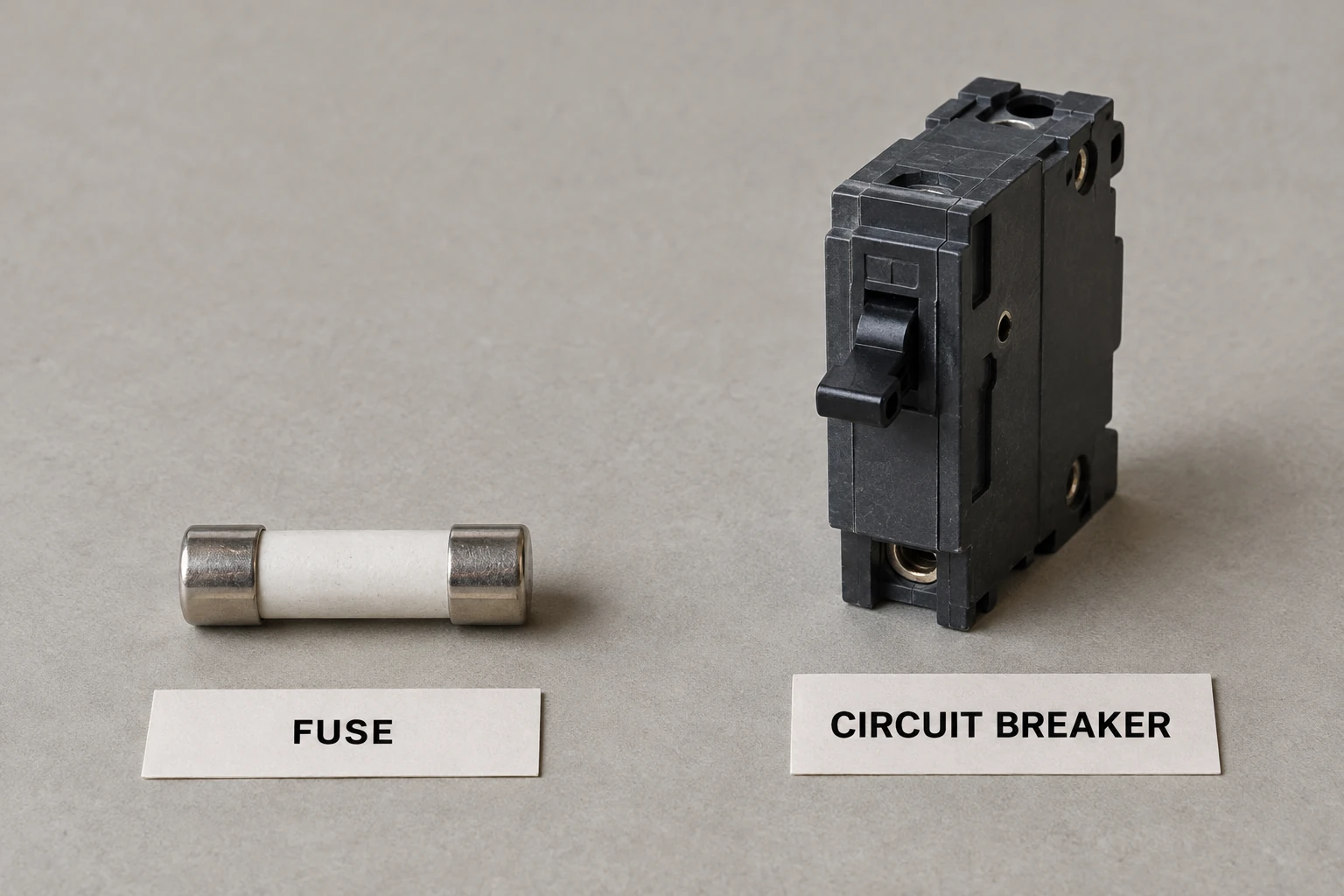
The distinction is replacement versus possible reset, not “fault remains” versus “fault fixed.” The mechanism label does not explain why the protective operation occurred. It also cannot establish that the equipment is ready to return to service. Those questions belong to the assessment of the actual installation.
Four conclusions the panel label cannot establish
A panel name identifies a general equipment category. It cannot establish condition, available capacity, resolution of an electrical event or every additional protection function. Those conclusions require different evidence.
The following claim check separates the familiar shorthand from the missing information:
| Statement in a description | What is actually established | What remains unresolved |
|---|---|---|
| “It has a breaker panel.” | The description identifies a breaker-based assembly. | The particular equipment’s identity and condition. |
| “The breaker is resettable.” | The device has a resettable operating characteristic. | The cause and outcome of the event that opened it. |
| “There is room in the box.” | The description claims available physical space. | Electrical capacity or suitability for an additional load. |
| “The panel protects the equipment.” | A protection claim has been made. | Which functions are documented, including any separate surge protection. |
The third example illustrates a problem in equipment descriptions: a statement about visible space is not a statement about electrical capacity. A photograph and an equipment specification answer different questions. Neither should silently replace the other in a comparison.
Likewise, an enclosure’s age or appearance does not identify all of its internal protective functions. A meaningful comparison needs the applicable equipment information. The box name is a starting point for that inquiry, rather than a verdict that one particular installation is adequate or inadequate.
Where surge protection fits in this comparison
Overcurrent protection and transient-overvoltage protection address different functions. A breaker-panel description alone does not establish whether surge protection is included.
Schneider Electric’s explanation of surge protectors distinguishes the breaker’s overcurrent role from the SPD’s response to transient overvoltage. This functional distinction is the useful point here; it does not establish the arrangement inside an unidentified panel.
Surge protection may be separately documented or identified as part of an equipment assembly. The relevant question is which component or documented feature provides that function. The answer cannot be inferred simply from the words “fuse box” or “breaker panel.”
Wanze’s AC surge protection devices category provides a separate route for researching transient-overvoltage components. It does not establish a panel-replacement choice or the compatibility of an SPD with an existing installation.
Turn an ambiguous equipment description into a useful question
A useful question names the missing fact instead of asking whether one broad equipment category is universally better. That makes a quotation or property description easier to assess without turning it into an installation instruction.
Consider a hypothetical listing: “Breaker box, spare room, full protection.” It contains three claims, each needing a different explanation:
- Equipment identity: which manufacturer and assembly designation does “breaker box” refer to?
- Meaning of spare room: does the description refer only to physical space, or is there a separate documented capacity assessment?
- Meaning of full protection: which protective functions and components are actually identified in the applicable documentation?
These questions can be answered through equipment records and a qualified assessment of the installation. This article does not ask a reader to open an enclosure, reset a device or replace a fuse to obtain the answers.
A precise reply to that listing would separate the claims: identify the assembly, describe what “spare room” means, and name the documented protective functions. If the reply supplies only a photograph of the closed enclosure, it addresses appearance while leaving the capacity and function questions open.
The same three questions apply to a fuse-based assembly. Comparing the assemblies and their documented protective functions gives the reader a more useful starting point than choosing between two loosely used box names.