
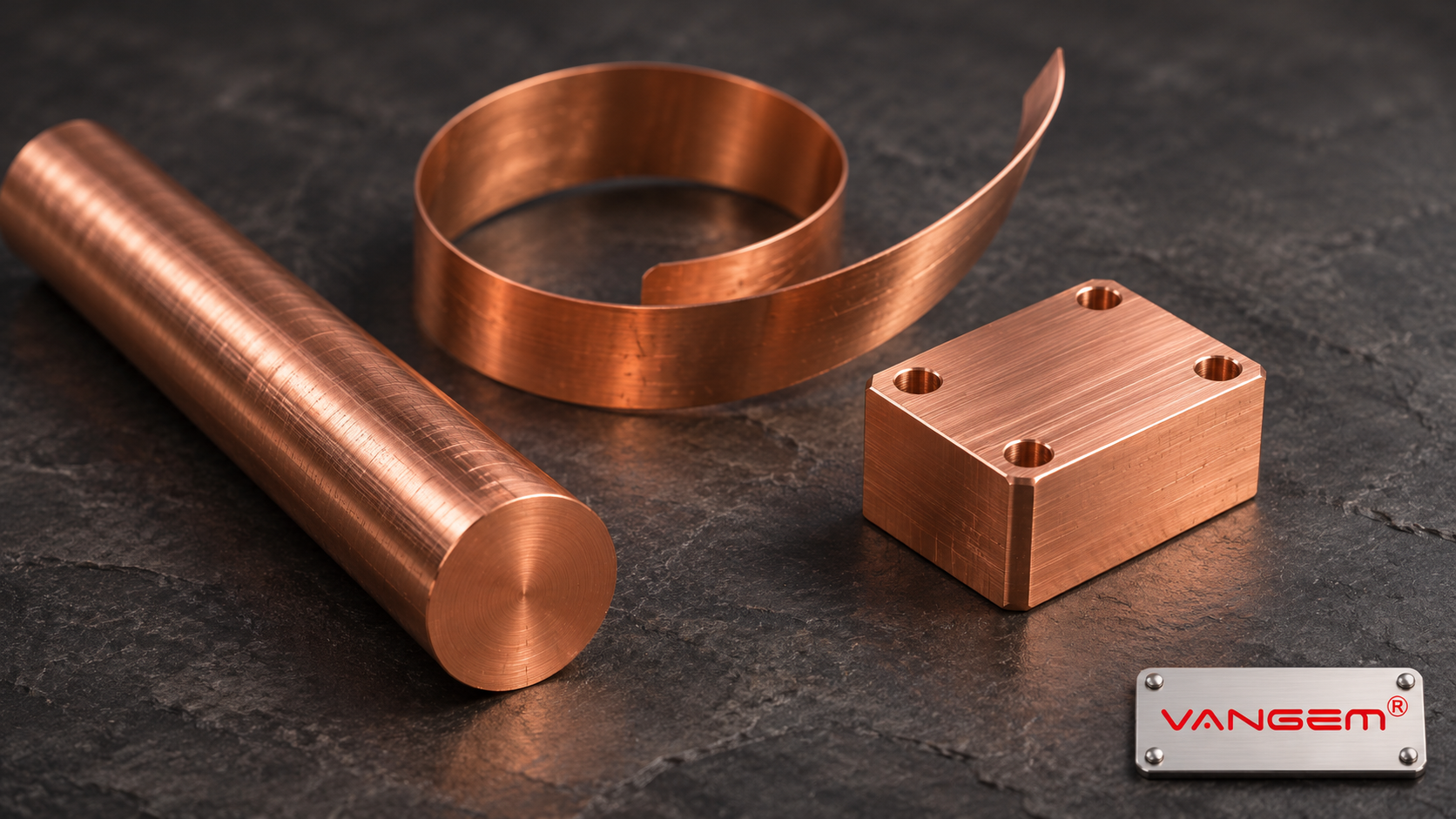
Oxygen free copper meaning starts with a material family in which oxygen is controlled to a specified low level. It is a material family, rather than one universal grade or a promise about finished electrical equipment. For a purchasing decision, the exact grade designation matters more than the abbreviation OFC alone.
Common names include oxygen-free copper, oxygen-free electronic copper and electrolytic tough pitch copper. They should be translated into a stated material specification before a quotation is compared or a part is approved.
Oxygen free copper meaning starts with the grade
Three identifiers often appear in US material discussions. The names distinguish material grades; they do not establish the identity of a particular delivered lot.
| UNS designation | Common name | Useful distinction |
|---|---|---|
| C10100 | Oxygen-free electronic copper, OFE. | An identified oxygen-free grade. |
| C10200 | Oxygen-free copper, OF. | A different grade from C10100. |
| C11000 | Electrolytic tough pitch copper, ETP. | Different material designation from OF and OFE. |
The shorter forms C101, C102 and C110 are also used commercially. Recording the complete designation reduces ambiguity when documents move between a buyer, fabricator and material supplier.
None of these names can be verified from the copper’s color or surface finish. A photograph can show a form or visible condition, but it cannot prove composition, material identity or traceability.
OFC and OFHC are not a complete purchase specification
OFC is a broad description. OFHC, meaning oxygen-free high conductivity, is also encountered as trade wording. A buyer still needs the identified grade rather than assuming that every use of the term refers to one material.
Material identity also leaves the supplied product condition to be specified. Rod, strip and a finished machined part answer different purchasing needs. The applicable specification, form, dimensions and temper should be established for the actual order.
There is no need to add an impressive purity claim to fill that gap. If a project requires a particular composition limit or property, request the relevant specification and supporting material evidence. A broad description cannot replace those records.
Separate the material from the finished component
Material evidence describes what a part is made from. Supplied-form evidence describes the item being delivered and its specified condition. Finished-component evidence addresses the completed component’s requirements. These are connected questions, but they are not the same question.
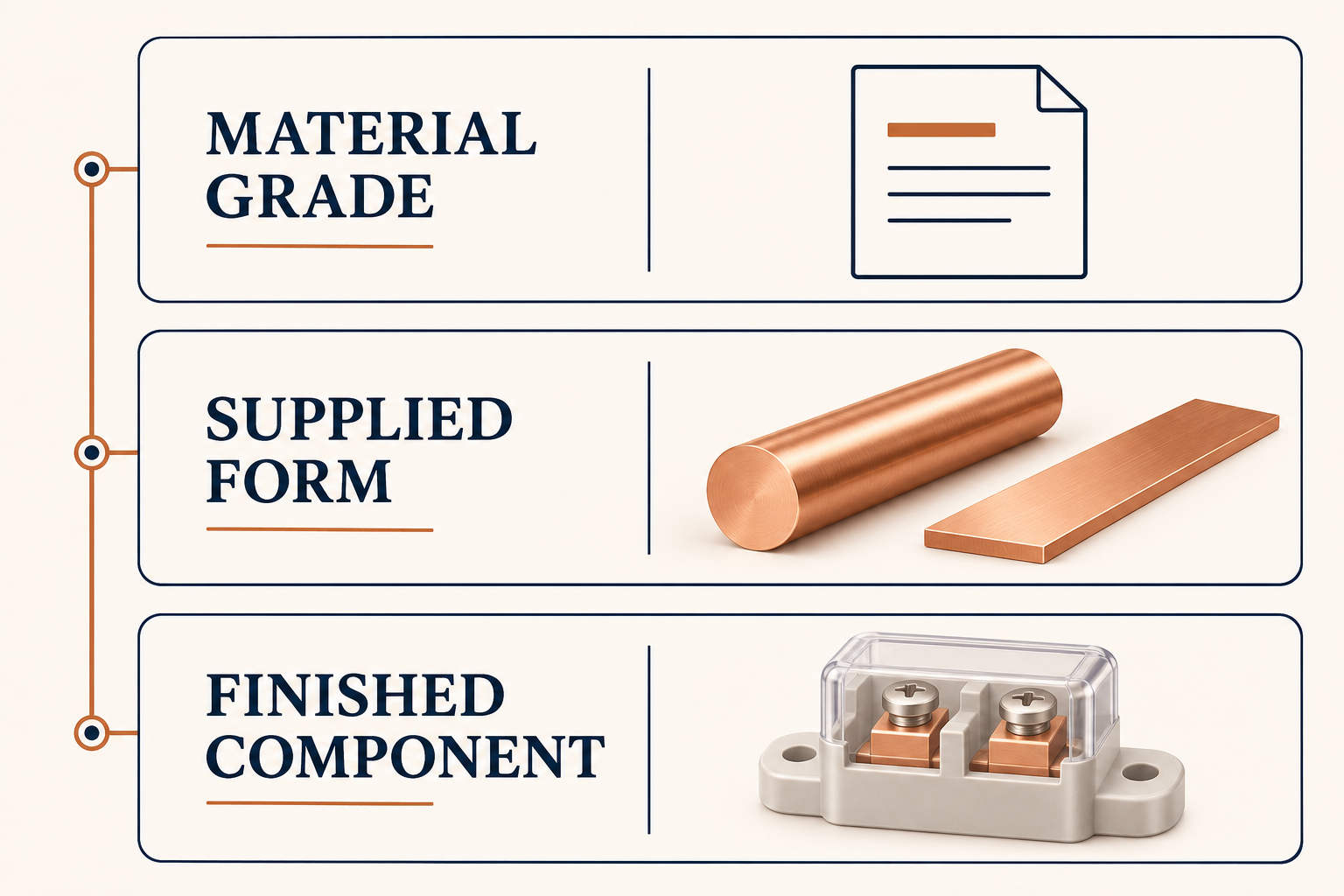
A material grade alone does not establish a completed connection’s current rating, temperature rise or suitability in equipment. Those claims require evidence about the relevant component and configuration.
Likewise, a finished-product photograph cannot establish its internal copper grade. If that grade is a purchase requirement, the supplier needs to connect the material documentation to the actual item. The connection should be documented, rather than inferred from the appearance of a sample.
Turn a vague quotation into an answerable question
Consider a hypothetical quotation that says only “OFC copper part.” Before comparing its price with another offer, identify what remains unspecified. Does the supplier mean C10100 or C10200? Is the offer for raw material, a blank or a finished part? Which drawing and material condition apply?
A clearer enquiry identifies the required grade and the supplied form, then asks the supplier to confirm the applicable specification and traceability evidence. Where the purchase is for a fabricated component, the drawing and acceptance requirements belong with that enquiry.
This approach also makes a disagreement easier to resolve. If the supplier offers another grade, the proposed substitution becomes an explicit technical question. It should not disappear into a shared abbreviation such as OFC.
The example organizes purchasing information. It does not prescribe a fabrication process or claim that one copper grade is universally superior. Processing conditions and performance requirements need their own supporting evidence.
Read finished electrical equipment evidence separately
The same evidence boundary applies when reviewing AC surge protection devices. A material discussion does not establish a device’s internal conductor grade or electrical rating.
Wanze’s verified product scope is AC and solar PV SPDs. This article does not claim that Wanze supplies copper stock or uses a particular oxygen-free grade. For equipment procurement, request the offered model’s documentation and identify any material requirement explicitly.