

T/T payment means payment by telegraphic transfer, an electronic transfer method commonly associated with overseas wire transactions. In an equipment quotation, the term describes how funds are transferred. It does not, by itself, define a deposit, a balance-payment deadline or the conditions for shipment.
The commercial agreement and the recipient’s identity need separate checks. A familiar transfer abbreviation cannot establish that an invoice is correct or that a changed bank instruction is authentic.
T/T payment does not define the commercial terms
There are three different questions in a payment review. The transfer method describes the banking route. The commercial terms describe when payment is due and which agreed event triggers it. Beneficiary verification concerns who is intended to receive the funds.
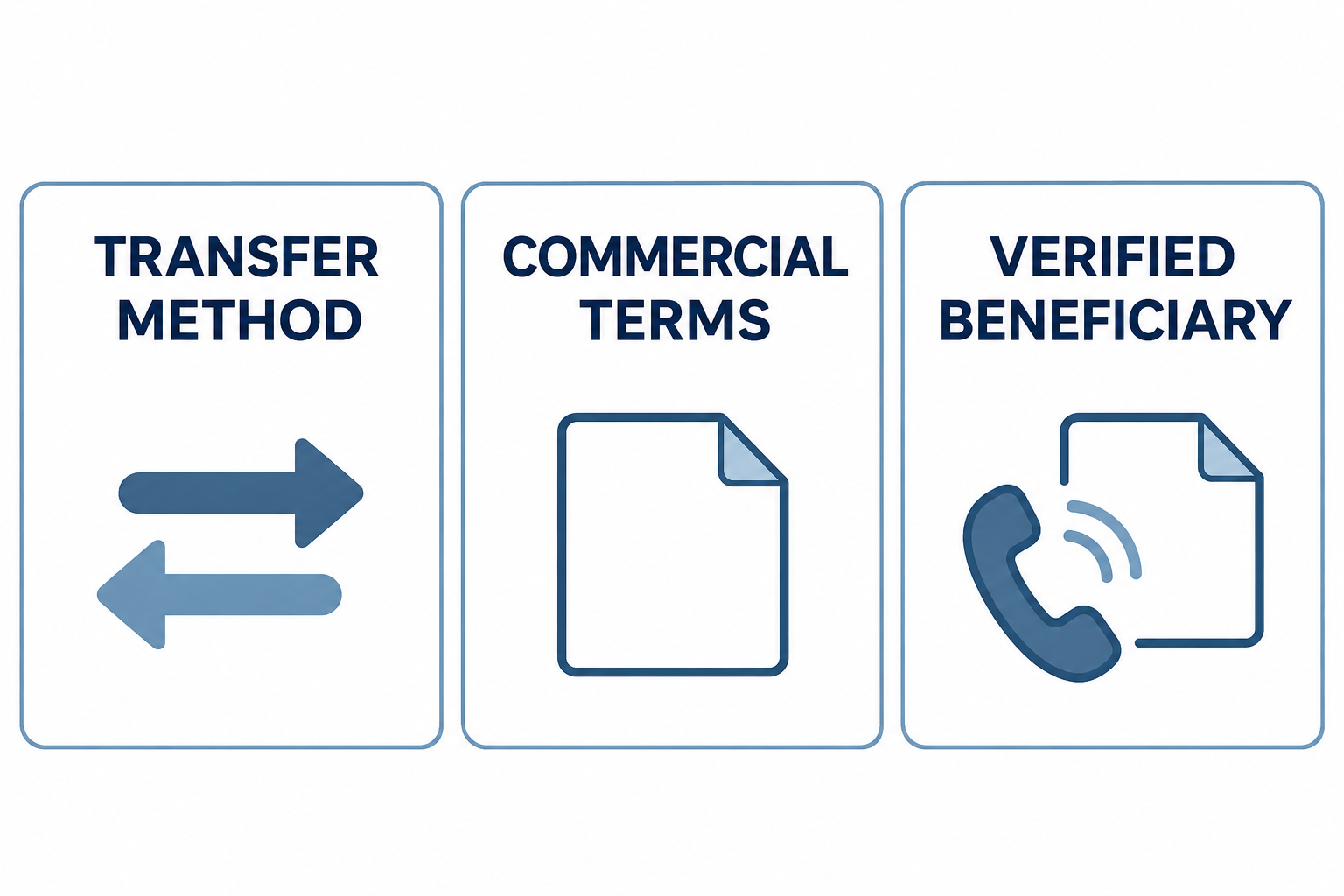
A quotation stating only “T/T” leaves important terms unresolved. Buyer and supplier still need an agreement about the amount due at each stage, the relevant conditions and the supporting documents.
Advance payment also allocates risk differently from payment after shipment or another agreed event. The transfer method does not remove that commercial issue. A buyer should evaluate the actual proposed agreement rather than treat T/T as a standard package of terms.
Read the invoice alongside the agreed order
Begin with the identity of the order and the goods. Check that the invoice refers to the intended supplier, product configuration and agreed commercial record. A corrected price or revised quantity should have a clear connection to the approved order.
Then compare the payment request with the agreed stage and trigger conditions. An invoice can describe a transfer method accurately while requesting payment at a point that the parties have not agreed.
Currency, charges and the information required by the bank also need confirmation for the actual transaction. This article provides no universal fee, exchange rate, settlement time or deposit ratio.
A useful record explains why that payment is due and which verified instructions apply. Keep that record within the business’s normal approval process instead of allowing a short email to replace the underlying agreement.
Treat changed beneficiary instructions as a separate verification
Consider a hypothetical revised invoice arriving shortly before a payment deadline. The product and amount look familiar, but the bank instructions have changed. That change raises a recipient-verification question even if the commercial amount is correct.
Business email compromise can involve legitimate accounts that have been compromised, as well as messages that impersonate a familiar sender. A recognizable logo or an existing email conversation is therefore insufficient proof that new instructions are authentic.
Verify the change through an independent, known communication channel. A telephone number supplied only in the suspicious message does not provide that independence. Use the established contact information and the business’s required verification process.
The current IC3 guidance recommends secondary-channel verification of account-information changes. The dated joint advisory cited below also states the known-contact principle; its sector-specific incidents are not presented as electrical-industry cases.
Record the outcome before any payment decision. Unexplained urgency should not substitute for verification. These controls reduce a particular fraud exposure; they do not guarantee that an account or transaction is free of risk.
If a transfer may have been diverted
IC3 advises contacting the originating financial institution promptly when fraud is recognized and filing a detailed complaint. Preserve the relevant records for the bank and reporting process.
A recall or recovery request does not guarantee that funds will be returned. The bank must address the specific transaction and available options. Do not assume that a transfer confirmation resolves a suspected change of recipient.
This section concerns a suspected incident. It is not a promise of recovery or an instruction to send money.
For an equipment enquiry, confirm terms for that order
For a Wanze enquiry, identify the AC surge protection devices and exact models being discussed. Request the current quotation and the commercial terms that apply to that order.
This article establishes no Wanze payment method, deposit ratio, bank account, credit arrangement or delivery commitment. Those details must come from the relevant verified transaction documents.
A complete payment request connects the order, agreed payment stage and independently verified recipient. The letters T/T describe only one part of that record.