

An MOV surge suppressor uses a metal oxide varistor to change its electrical behavior when voltage rises above its normal operating range. The MOV is part of a protection design that limits transient overvoltage; it is not a universal clamp for every event and it does not make a device’s system match automatic.
For procurement, the important distinction is between how the MOV works and what the complete SPD is rated to do. The enclosure, thermal protection, modes, disconnector, and documented ratings all remain part of the selection.
How a mov surge suppressor uses an MOV
At normal system voltage, the MOV is intended to remain relatively high impedance. During a transient, its voltage-current behavior changes and it conducts more current, diverting energy according to the device design. NEMA’s explanation of how SPDs work is useful for the system-level idea: the device limits a transient path so the connected equipment sees a lower overvoltage than it otherwise might.
That description is deliberately bounded. The actual limiting level, surge-current capability, response, thermal behavior, and failure mode depend on the selected part and assembly. A standalone MOV component cannot be treated as the same product as a complete listed or documented SPD.
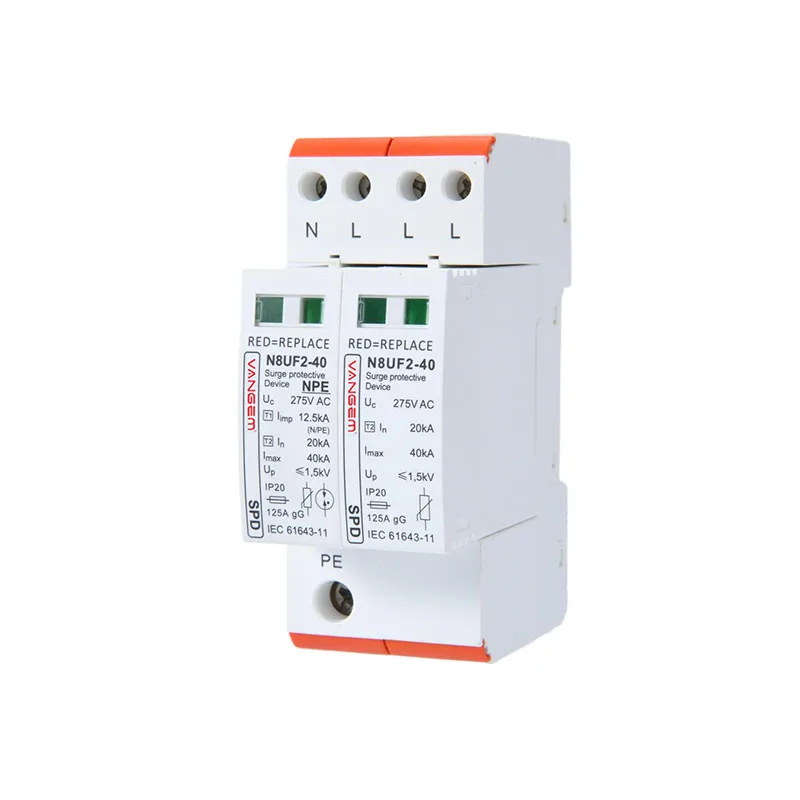
Why MOV surge suppressors age
MOVs can experience electrical and thermal stress when exposed to repeated transients, temporary overvoltage, or conditions outside the intended system range. Aging does not mean every indicator will change at the same time, and a green status window should be interpreted only through the product manual. A buyer should also account for environmental conditions, enclosure, upstream protection, and the event history when reviewing replacement signals.
| Review item | Question to ask | Why it matters |
|---|---|---|
| System voltage | Does the continuous operating range match the topology? | Temporary or continuous overvoltage can stress the MOV. |
| Surge exposure | What switching, lightning, or outdoor paths exist? | Event history informs replacement and coordination review. |
| Thermal protection | What disconnection and indication does the assembly document? | Component behavior alone does not describe the finished device. |
| Ratings | Which In, VPR, MCOV, and SCCR values apply? | Each rating answers a different selection question. |
MOV SPD selection checklist
- Identify the AC or PV DC circuit and its voltage relationship.
- Use the complete SPD datasheet, not a loose MOV part number, for the purchase decision.
- Compare MCOV, VPR, surge-current rating, SCCR, modes, enclosure, and status indication.
- Ask how the device is disconnected or replaced after an end-of-life indication.
- Record the model and document revision in the maintenance file.
Wanze’s product directory provides family discovery. Exact MOV construction, ratings, and replacement instructions must come from the current model documentation.
FAQ
Does an MOV stop every surge?
No. It is one protective element in an SPD, and the complete device has defined operating and surge conditions. System coordination and documentation still matter.
Can an MOV be replaced by any similar part?
No. A replacement must match the approved device design, ratings, thermal behavior, and instructions. A visually similar component is not enough evidence.
Does a failed MOV always trip a breaker?
Not necessarily. The product’s thermal disconnection and status indication determine what an operator sees. Follow the exact manual and qualified review process.