

Choosing a surge protector for solar panels starts with identifying the path: PV DC between the array and inverter, AC on the inverter output, or another connected interface. A solar installation may need more than one protection review, and a device selected from the words “solar surge protector” alone is not enough.
The buyer should collect the array voltage, system topology, inverter arrangement, cable routes, building exposure, and the current PV SPD documentation. Then compare Ucpv or the applicable continuous operating value, discharge ratings, modes, enclosure conditions, and installation role.
How to choose a surge protector for solar panels
PV DC and inverter-side AC are different electrical environments. A DC PV SPD must be suitable for the PV circuit and its maximum operating voltage. An AC SPD belongs to the AC system and must match its voltage and topology. A device designed for one side should not be moved to the other side simply because both are called surge protectors.
Outdoor array conductors can create long entry paths and exposure to induced transients. Schneider’s PV guidance emphasizes that cable length and the location of protection affect the equipment path. Treat the array, inverter, building entry, and AC distribution as a coordinated review rather than a single box choice.
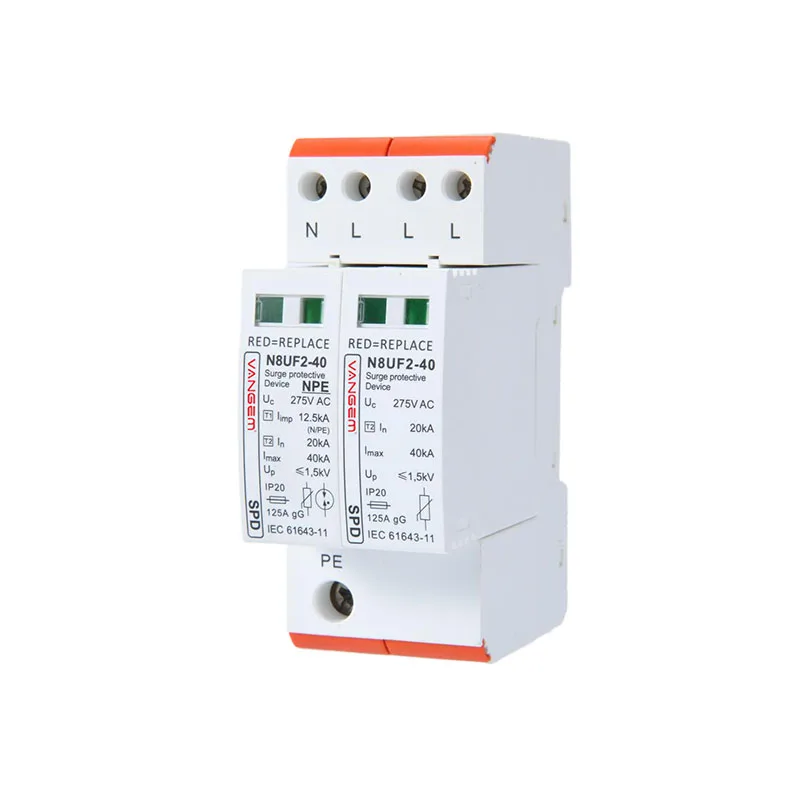
Solar-panel SPD selection matrix
| Review area | DC PV question | AC question |
|---|---|---|
| System identity | Array voltage, string arrangement, and inverter DC input. | Inverter output voltage, phases, and service topology. |
| Continuous operating value | Ucpv or the exact PV value stated by the manufacturer. | MCOV or applicable AC continuous operating value. |
| Location | Array combiner, inverter input, or other documented PV position. | Inverter output, distribution, or service-side position. |
| Exposure | Roof conductors, building entry, and external routing. | Grid coupling, transfer equipment, and downstream loads. |
Solar PV procurement checklist
- Draw the DC and AC paths and mark the inverter, array, service entrance, and building entry.
- Record maximum system voltage, topology, cable routes, and environmental exposure.
- Request the current PV or AC SPD datasheet and installation manual.
- Compare Ucpv or MCOV, surge-current rating, VPR, SCCR, enclosure, and replacement indication.
- Have a qualified designer review coordination, grounding, bonding, and code requirements.
For PV family discovery, use the Wanze solar PV surge protection device category. Exact product fit must be established from the selected model documents and project inputs.
FAQ
Do solar panels need DC surge protection?
Many PV projects require a review of DC surge paths, especially with long outdoor conductors and exposed equipment. The exact device and location depend on the array, inverter, project design, and applicable requirements.
Can an AC SPD protect a PV string?
Do not assume so. AC and PV DC devices have different voltage and application requirements. Use a device documented for the specific path.
What is Ucpv?
Ucpv is a PV continuous operating voltage field used in product selection. Compare it with the actual PV system voltage and the current manufacturer documentation.