

Grounding is part of the surge-protection path, but “grounding surge protector” is not a complete installation instruction. The review must connect the SPD, protective conductor, bonding points, cabinet, and project documentation. A single resistance number cannot prove that the whole path is suitable.
For a buyer or engineer, the practical task is to collect the path evidence and ask a qualified reviewer to confirm the device, conductor routing, bonding, and applicable requirements together.
Grounding surge protector path review
An SPD diverts transient energy through its documented protection path. The effectiveness of that path depends on the device application, connection arrangement, conductor routing, bonding, and the surrounding system. Longer or poorly arranged conductors can change the practical path even when a grounding point exists.
A grounding surge protector review therefore starts with the complete connection, not with a single measurement. Trace the device connection to the bonding and grounding points shown in the project record, then compare that arrangement with the current manufacturer instructions. The goal is to identify missing evidence or mismatched assumptions before installation or replacement is approved.
| Evidence area | Question to document | What it does not prove by itself |
|---|---|---|
| SPD connection | Where is the device connected and which protection modes are documented? | That the entire installation is coordinated. |
| Protective conductor | How is the conductor routed, supported, and connected? | A universal conductor size or wiring recipe. |
| Bonding | Which bar, enclosure, and system bonding points are part of the review? | That a single resistance test covers every connection. |
| Drawings and records | Do the one-line diagram and maintenance notes match the current installation? | Code approval without a qualified project review. |
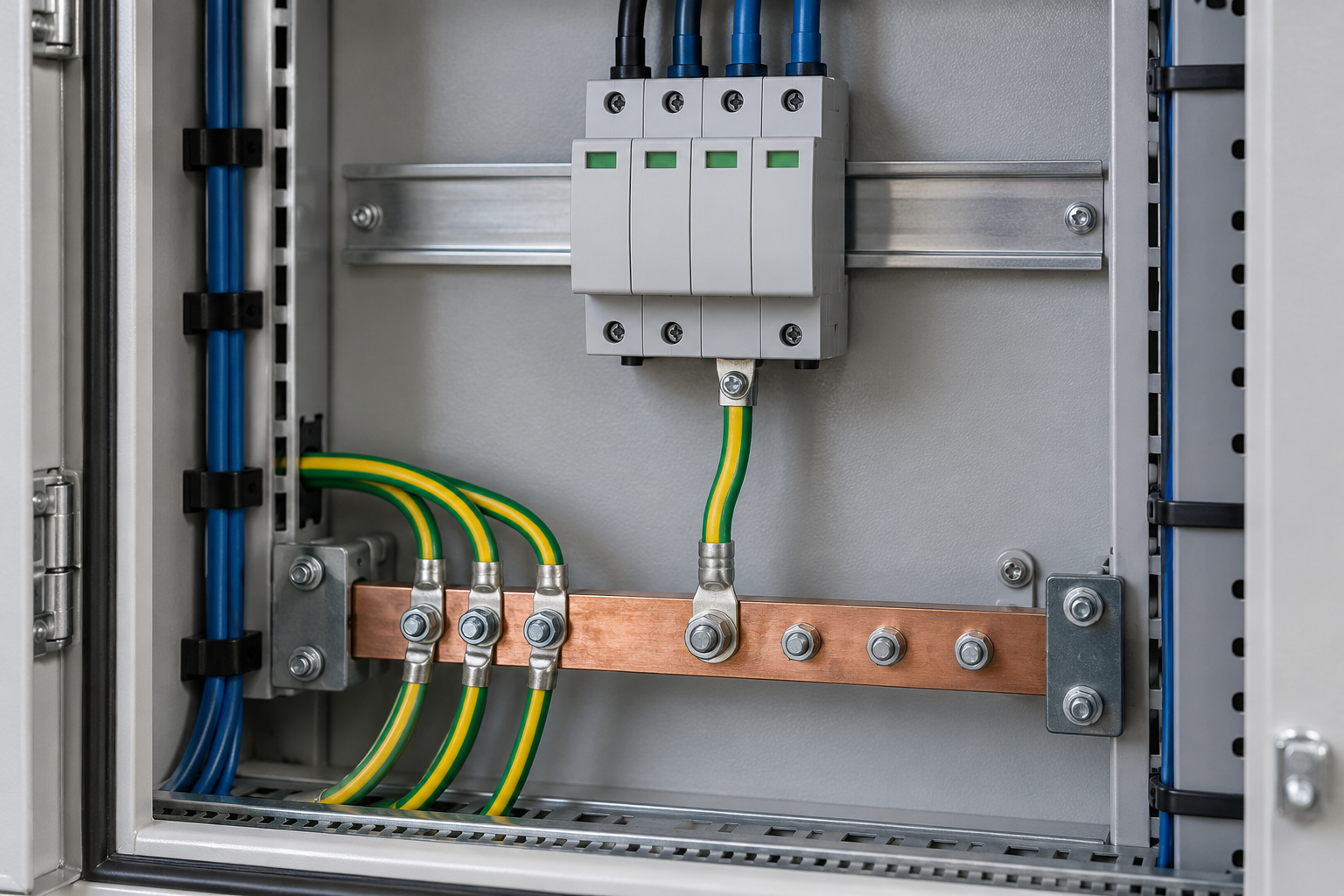
Grounding-path review checklist
- Identify the SPD model, protected path, system voltage, topology, and installation location.
- Trace the protective conductor and record its routing, connection points, and support condition.
- Review the grounding bar, enclosure bonding, and any relevant one-line or panel drawings.
- Compare the current manufacturer instructions with the installed arrangement and maintenance record.
- Ask a qualified reviewer to decide whether conductor layout, bonding, device selection, or project documentation needs correction.
For AC family discovery, see the Wanze AC surge protection device category. The category does not establish a grounding value or installation approval.
For an existing facility, record visible changes, maintenance notes, event history, enclosure condition, and any drawing revision that affects the path. For a new project, ask for the one-line diagram, panel information, bonding notes, and device instructions as one review packet. The specific conductor and connection decision remains project-specific.
When a device is replaced, do not copy the previous connection assumptions without checking the replacement model. Terminal arrangement, protection modes, accessories, and installation instructions may differ. A qualified reviewer should confirm that the selected device and the documented path still belong to the same protection design.
FAQ
Does lower grounding resistance always mean better SPD protection?
Not by itself. The review also needs device application, conductor routing, bonding, connections, and current project documentation.
Why does conductor length matter?
Routing contributes to the practical connection path. The exact design must be reviewed in the context of the device, cabinet, system, and applicable requirements.
What records should a buyer request?
Request the current datasheet, installation instructions, one-line or panel information, grounding and bonding records, and any maintenance or event history available for the installation.