
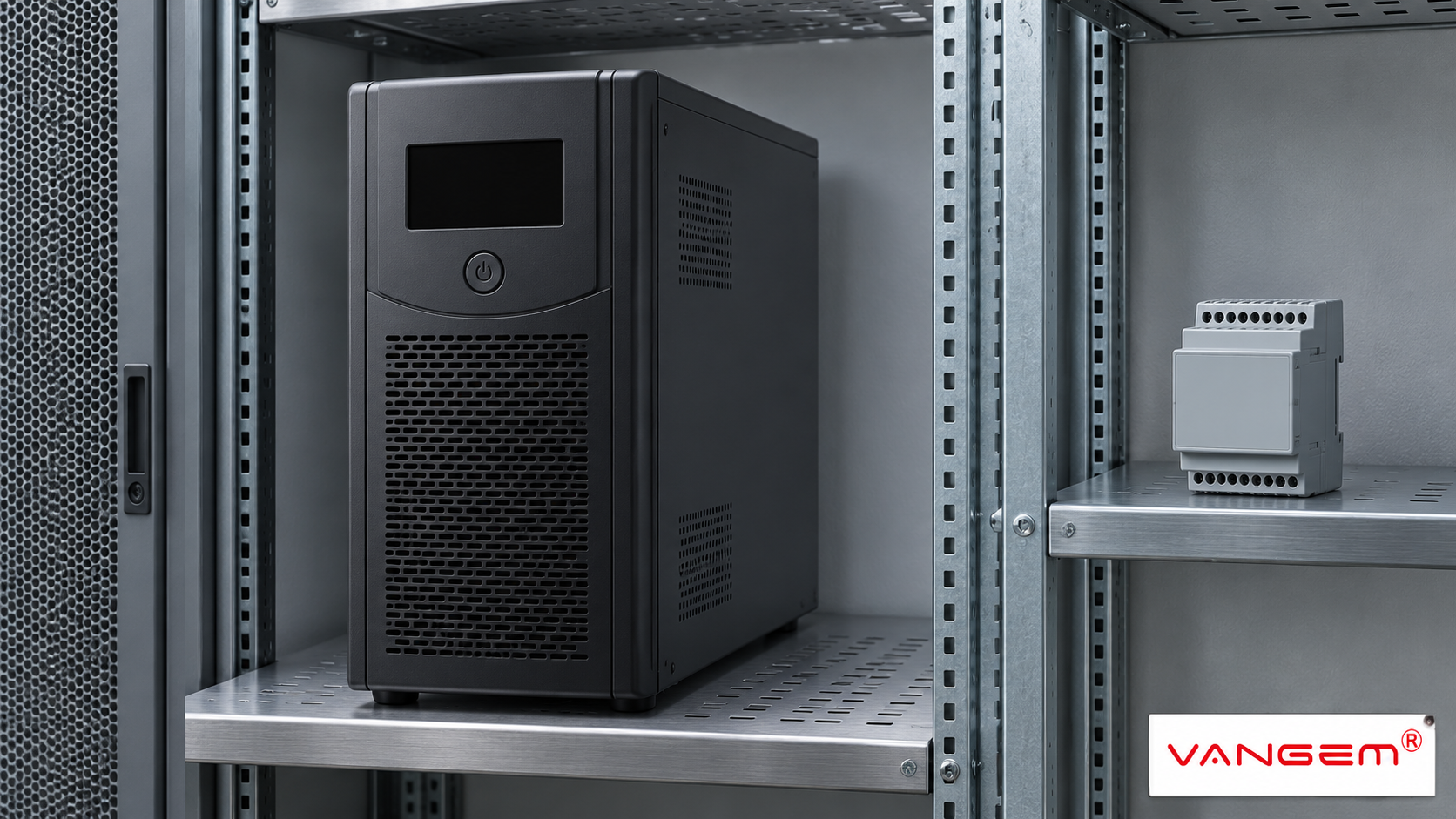
The key difference in surge protector vs UPS is the job each performs. A surge protector addresses transient overvoltage. A UPS, or uninterruptible power supply, provides backup power for specified connected loads when the normal supply is interrupted. A surge protector does not keep equipment running through a blackout.
A UPS may include surge protection and other power-conditioning features, but its exact capabilities depend on the model. Backup power and transient protection should be reviewed as separate requirements.
Surge protector vs UPS: compare the job first
| Question | Surge protector / SPD | UPS |
|---|---|---|
| What is the main function? | Address specified transient overvoltage conditions. | Provide backup power to designated loads. |
| Does it supply outage energy? | No battery backup from the surge function. | Yes, within the model’s load and runtime limits. |
| Which evidence matters? | SPD application, ratings and installation conditions. | Power capacity, output coverage, runtime and supported features. |
The table compares functions, rather than declaring one device better for every site. A requirement for continuity cannot be answered by an SPD’s surge rating. A requirement for facility surge protection is not fully defined by a UPS’s battery capacity.
Likewise, do not assume every UPS continuously regulates every supply condition. Its topology and specifications determine the features actually provided.
Check which outputs receive backup power
Some UPS products distinguish battery-backed outputs from surge-only outputs. A device connected to a surge-only group does not receive backup power merely because its receptacle is on the UPS housing.
Identify the outputs assigned to the loads that need continuity. The manufacturer’s documentation should describe that grouping and its limits. A marketing photograph of the front panel cannot establish which output serves a particular load.
Runtime is also conditional. It depends on the connected load and the selected configuration. Compare the relevant runtime information at the proposed load, rather than transfer a headline duration from another setup.
The useful purchasing record states which equipment needs backup, the required continuity task and the proposed UPS configuration. This article supplies no universal capacity margin or promised number of operating minutes.
A network cabinet can have two different requirements
Consider a hypothetical control-network cabinet. Its owner wants a controller to remain available during a short supply interruption. The same project also asks how transient exposure is addressed within the electrical distribution system.
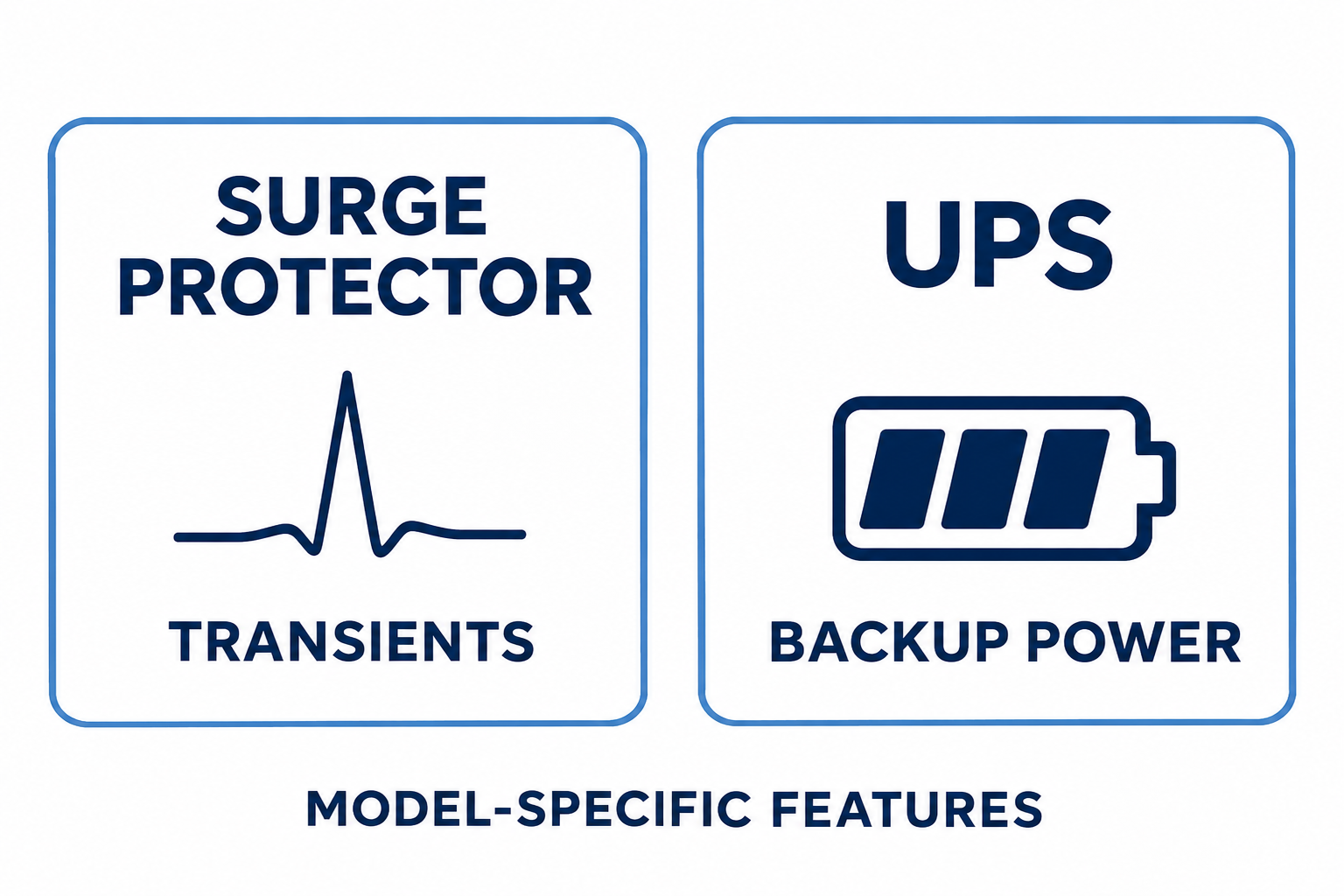
The continuity enquiry needs the controller’s load requirements and a suitable backup arrangement. The surge-protection enquiry needs the relevant distribution context and device documentation. Neither task should disappear because the other appears on the specification sheet.
The result may involve both functions, assessed within a coordinated system. It still requires a review of the actual components and conditions. This example does not select a UPS, prescribe an SPD location or guarantee that the cabinet will remain operational.
Coordinated protection is not a plug-chain instruction
Facility-level surge protection and cord-connected accessories have different deployment boundaries. Advice about a coordinated distribution system should not be read as permission to chain a surge strip with any UPS.
The exact UPS instructions govern its allowed connections and accessories. The product-family FAQ referenced below illustrates why a generic “use both” statement is insufficient: a manufacturer can restrict combinations for the products it covers.
Read that policy within its named product scope. It does not establish a universal rule for every UPS or every distribution-level SPD. Where compatibility is unclear, obtain the relevant equipment documentation and a response tied to the proposed configuration.
This is a document-selection boundary, rather than a connection procedure. The article does not instruct a reader to add a strip, alter a supply path or work inside electrical equipment.
Keep the SPD enquiry specific
Wanze’s verified catalog concerns AC and solar PV SPDs. Its AC surge protection device category is a starting point for an SPD enquiry; it is not a UPS catalog.
Describe the electrical system and the model documentation required for the surge-protection review. Where a UPS is part of the project, assess its requirements separately. No Wanze UPS, specific UPS compatibility or complete power-protection guarantee is claimed here.