
The main difference in UL Listed vs UL Recognized is the scope of the evaluation. Listing concerns a product evaluated for its stated use. Component recognition concerns a part or subassembly intended for integration into a larger certified end product, subject to its conditions of acceptability. A recognized part does not give the finished assembly a listing automatically.
For a buyer, the useful question is what was evaluated, under which record, and whether that scope matches the exact model offered.
UL Listed vs UL Recognized: compare the evaluated object
| Review question | Listed product | Recognized component |
|---|---|---|
| What is being evaluated? | The identified product within its certification scope. | A component or subassembly for incorporation into an end product. |
| What must the buyer check? | Exact model, category, market and applicable limitations. | Those details plus the component’s integration conditions. |
| What cannot be inferred? | Approval of every installation or application. | Listing of the completed equipment containing the part. |
These are different certification functions, rather than a simple ranking of good and bad components. Recognition can be appropriate for a part designed into equipment. The purchasing decision still needs to match the intended use and the project’s required evidence.
Conditions of acceptability belong in the purchase review
Recognized components are evaluated with specific conditions governing their use in the final product. These can concern matters such as the housing, wiring or temperature limitations. The applicable conditions come from the component’s documentation, rather than from a generic comparison article.
A supplier’s reply that a part is “UL Recognized” therefore leaves an important question unanswered: which conditions accompany the offered component? Request that information early enough for the equipment manufacturer to assess the intended integration.
For a hypothetical sourcing review, imagine two otherwise comparable offers. One supplies only a cropped mark image. The other identifies the model, certification record and relevant conditions. The second offer gives the reviewer something to check; neither offer should be treated as approved merely because its quotation contains the word UL.
Match the offer, label and record
A useful document review follows the identity of the supplied item across separate records. Begin with the quotation: record the exact manufacturer and model, including any suffix that changes the offered configuration. Then request a readable product label or marking example tied to that item.
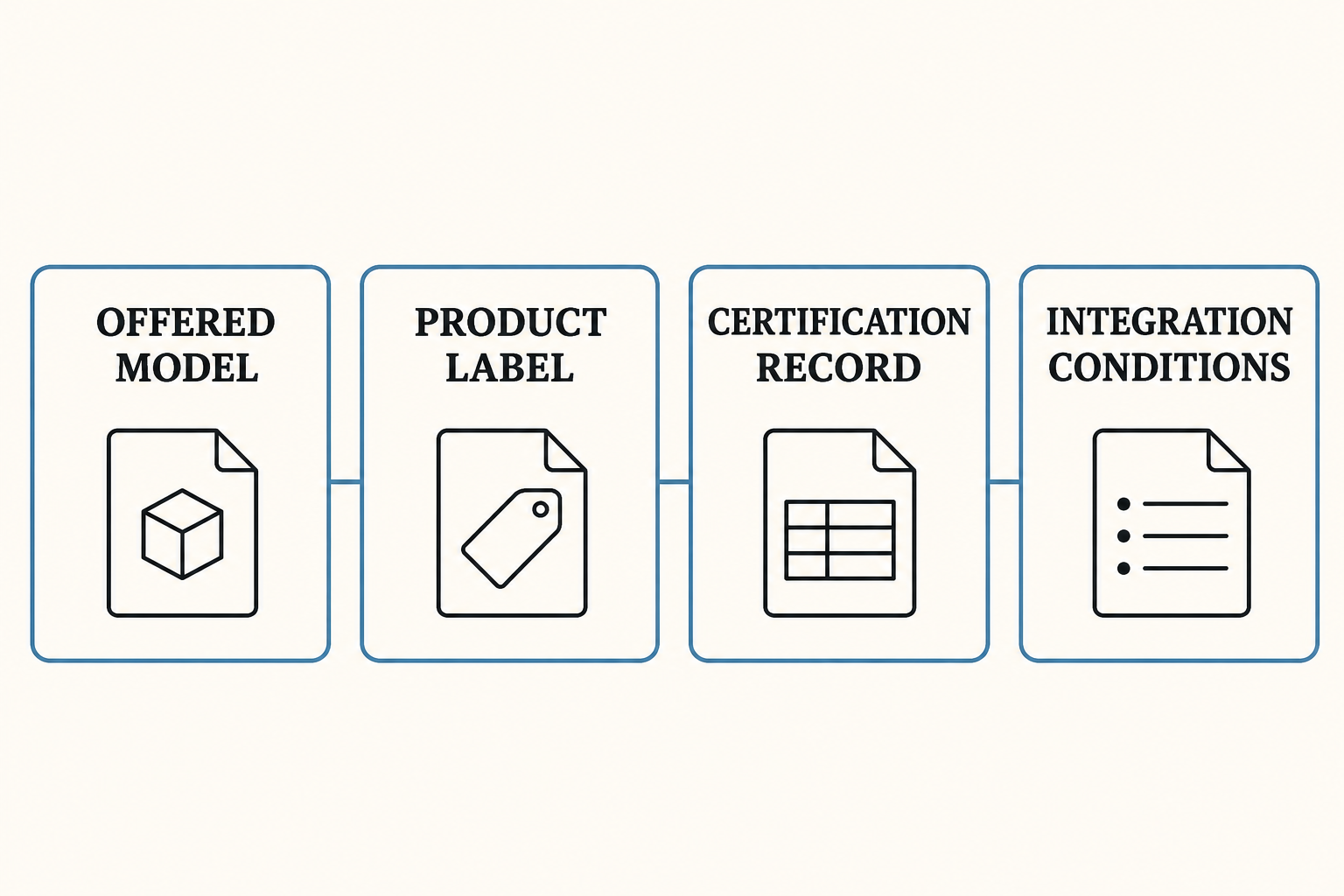
Use the available identifier or file information to locate the relevant certification entry and category guide information. Product iQ supports searches using identifiers and other product information. A matching company name alone is less precise than a record that covers the offered model and category.
Read the entry’s scope and market information alongside its limitations. For a recognized component, obtain the associated conditions of acceptability and compare them with the proposed integration. Retain the supporting documents with the purchasing record.
If the model, label and record do not agree, ask the supplier to resolve that mismatch. The unresolved point should remain visible in the submittal. This editorial sequence organizes evidence; it does not replace the responsible certification or project review.
Why the word Certified can appear instead
Certification artwork has more than one valid form. Enhanced marks can use the word Certified, while smart marks can include a QR code leading to certification information. Country codes, attributes and identifiers help describe or trace the scope.
A buyer should therefore avoid judging validity solely by whether a label looks like a familiar traditional mark. Follow the identity and certification information. A QR code or a convincing image is useful only when the resulting record actually matches the offered item.
For an SPD enquiry, request the model record
When reviewing AC surge protection devices, keep the commercial product description separate from certification evidence. A category page can identify a product family; it does not establish a certification for every model in that family.
Ask for the exact offered model’s applicable record and supporting documentation when the project requires UL evidence. This article has not authenticated a Wanze UL file and makes no Listing or Recognition claim for a Wanze product.
The purchase review is complete only when its required evidence matches the supplied configuration. A generic logo on a quotation cannot answer that question.